Why Historical Context Matters When Evaluating Military Firearms
A military firearm cannot be judged by visible condition and mechanical design alone. Those features matter, but they are not self-explanatory. A rifle or handgun also records supply decisions, industrial limits, battlefield demands and changing ideas about ammunition. Without that context, an apparently original feature may be misunderstood, while a later alteration may be mistaken for part of the design.
The most useful way to study military firearms is not as a parade of models and dates, but as a series of turning points that changed what armies expected from weapons and what factories could reliably produce.
From separate loading to self-contained cartridges
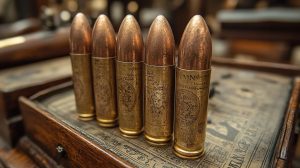
One decisive change came when firearms moved from systems requiring separately handled powder and projectiles to self-contained metallic cartridges. Earlier military arms could be effective, but their loading process imposed practical limits in wet conditions, under pressure and during repeated handling. Cartridge development joined propellant, projectile and primer in one unit, creating a more consistent operation.
The change affected more than loading speed. It altered ammunition storage, transport, inspection and battlefield supply. Armies could issue standardized cartridges in organized quantities rather than manage several separate components. The firearm and its ammunition also became a more closely connected system: the chamber, extractor and feed arrangement had to suit the intended cartridge.
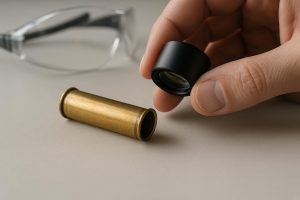
For an evaluator, the question is not simply whether a mechanism appears advanced. Ask what problem its cartridge solved, what system it replaced and whether the ammunition is correctly identified. Markings, chamber dimensions and historical documentation should be treated as evidence, not guessed from appearance. Keep an unidentified firearm unloaded and obtain qualified technical verification before any attempt to fire it.
The shift to repeating arms changed military priorities
The practical spread of repeating military arms was another turning point. A single-shot weapon could be robust and accurate, yet repeating mechanisms changed the relationship between individual action, ammunition expenditure and tactical expectations. The design challenge became controlled feeding, reliable extraction and manageable supply, not merely the ability to launch one projectile.
This period also shows why a later design should not automatically be called better. A repeating arm might offer greater speed while introducing more parts, maintenance demands or dependence on ammunition quality. Military adoption reflected compromises among training, manufacturing capacity, doctrine and logistics.
When evaluating such an arm, separate its original military purpose from modern assumptions. Look for evidence of the intended configuration: action type, feeding arrangement, sighting system, markings and accepted ammunition family. A missing or replaced component may affect historical interpretation even when the firearm remains mechanically understandable. Conversely, worn finish or service repair may be consistent with honest use rather than neglect.
Smokeless powder made older assumptions obsolete
The adoption of smokeless propellants near the end of the nineteenth century created another fundamental break. It reduced visible smoke and residue and enabled new relationships among cartridge design, barrel length and firearm handling. The transition was not merely a cleaner version of existing ammunition; it required military institutions to reconsider pressures, materials, storage and the service life of earlier arms.
Ammunition history is therefore essential to safe evaluation. Cartridges that appear similar can belong to different eras or operate under different design assumptions. A firearm resembling a later model may have been made for an earlier cartridge or altered during a conversion program. Names used by collectors, manufacturers and military records are not always interchangeable.
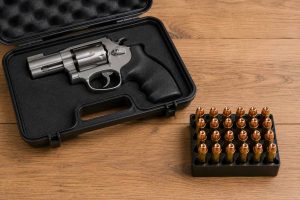
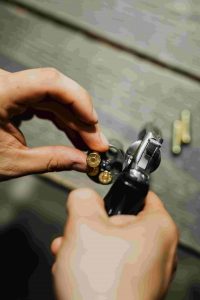
Do not rely on visual similarity, a seller's label or a cartridge that seems to fit. Confirm the chambering through authoritative references and inspection by a competent gunsmith or other appropriately qualified professional. If the firearm's identity or condition is uncertain, do not load or fire it. Laws governing possession, transfer, importation, storage and ammunition vary by jurisdiction and may change; consult current official guidance when those issues arise.
Industrial production reshaped what "original" means
Interchangeable parts and organized mass production transformed firearm craftsmanship. Earlier arms could involve substantial hand fitting, while later military production emphasized repeatable processes, gauges and controlled specifications. Neither approach is automatically superior; each reflects a different industrial environment and definition of acceptable service performance.
This matters when judging markings, finish and components. A rifle or handgun assembled from parts during military service may be historically correct for its period even if its serial numbers do not form a neat sequence. A replacement barrel, arsenal repair or updated safety feature can tell a more accurate story than a falsely untouched appearance. Modern substitutions, refinishing and undocumented modifications, however, can blur the line between a service arm and a later recreation.
A sound evaluation records observations before assigning meaning. Photograph markings without aggressive cleaning, note mismatched components and distinguish fact from interpretation. Avoid polishing, filing, disassembly or other irreversible work merely to make an object look uniform. Preservation and safety should take priority over cosmetic improvement.
Use chronology as a practical evaluation tool
Historical context is most useful when it changes a decision. Before handling or documenting a military firearm, ask:
– What military problem was the design intended to address?
– Which cartridge and propellant era belong to the original system?
– Does the observed configuration fit the model's production and service history?
– Are later repairs, conversions or replacements distinguishable from original work?
– What evidence could confirm the identification without firing or altering the firearm?
Use more than one type of clue. Manufacturer and arsenal markings, period manuals, institutional records, reputable reference works and qualified inspection can support one another. A single attractive detail rarely establishes a complete history.
The strongest evaluation combines mechanical caution with historical humility. A military arm is not merely an object that survived from another period; it resulted from decisions made under technical, industrial and logistical pressure. Understanding those turning points makes the collector more careful, the caretaker less likely to damage evidence and the handler more likely to put safety ahead of assumption.